
Role in WWII and Indian Independence Movement
- Home
- Movement
Role in World War II and National Defense
During World War II, Vinayak Damodar Savarkar advocated the idea of strengthening India’s military capacity. He encouraged Indian youth to join the armed forces, believing that military training would prepare the nation for future self-defense and independence. Savarkar argued that disciplined military experience could build confidence, organization, and national strength among Indians during a time of global conflict.
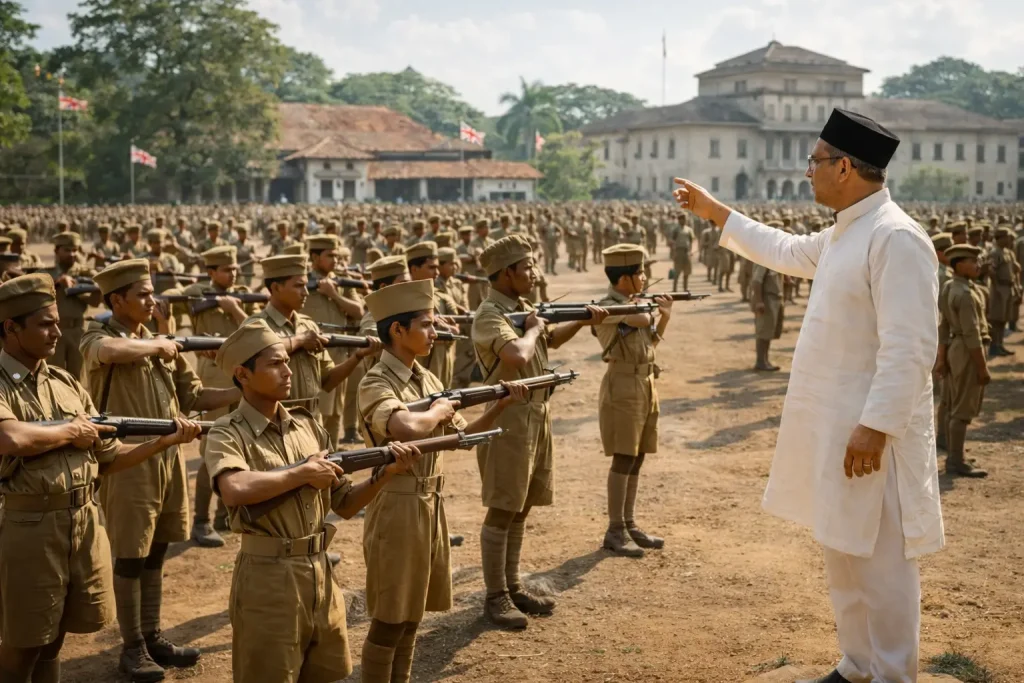
Savarkar viewed Indian militarization as a strategic step toward empowering the country politically and socially. He believed that widespread participation in military service would develop leadership skills and unity among Indians from different regions and communities. By encouraging recruitment and training, he hoped that Indians would gain valuable experience in modern warfare, which could later contribute to the country’s ability to defend itself and assert national sovereignty.
Negotiations and National Strategy Debates
Political Dialogue
Vinayak Damodar Savarkar engaged in discussions on national strategy, emphasizing organized political thought and long-term planning for India’s independence.
Strategic Vision
Savarkar believed national freedom required careful planning, unity, and practical political strategy alongside revolutionary enthusiasm.
Military Preparedness
He argued that strengthening military skills and discipline would prepare Indians to defend and secure independence.
National Unity
Savarkar emphasized unity across communities and regions to strengthen India’s collective struggle for sovereignty.
Political Debate
His ideas often sparked debate among leaders regarding methods, strategies, and the direction of India’s freedom movement.
Ideological Influence
Savarkar’s political writings contributed to ongoing discussions about nationalism, governance, and India’s future political structure.
Position on Subhas Chandra Bose and the Indian National Army
Vinayak Damodar Savarkar and Subhas Chandra Bose shared a strong belief in the importance of military strength in the struggle for India’s independence. Savarkar consistently emphasized the need for Indians to gain military training and experience, especially during the years of World War II. He believed that participation in armed forces would help Indians develop discipline, leadership, and strategic capability. This perspective indirectly aligned with Bose’s later efforts to mobilize soldiers and organize the Indian National Army. Both leaders, though following different paths, highlighted the importance of organized military action as a factor in achieving national freedom.
Savarkar’s encouragement for Indians to join the military during the wartime period was based on the idea that trained soldiers would become a valuable asset for the nation in the future. He argued that gaining experience in modern warfare and military organization would strengthen India’s ability to defend itself and assert independence. When Bose later formed the Indian National Army with the goal of challenging British authority, many observers connected this development to the broader emphasis on militarization advocated by leaders like Savarkar. While their strategies and circumstances differed, both figures recognized that military preparedness could play a role in shaping the future of India’s freedom movement.
The relationship between Savarkar’s ideas and Bose’s actions has often been discussed by historians studying India’s independence struggle. Bose pursued an international strategy by seeking support from foreign powers and mobilizing Indian soldiers abroad to form the INA. Savarkar, meanwhile, focused on encouraging Indians within the country to build strength through military training and organizational discipline. Although their methods were different, both leaders reflected a broader trend within the freedom movement that viewed armed capability as a significant factor in challenging colonial rule. Their perspectives continue to be examined in discussions about the diverse strategies that shaped India’s path to independence.