
“Hinduize all politics and militarize all Hindus.”
Poet, patriot, reformer shaping India's revolutionary nationalist thought.

Revolutionary Thinker and Nationalist Leader
Vinayak Damodar Savarkar was a prominent freedom fighter, political thinker, poet, and social reformer who played a significant role in India’s struggle against British rule. A strong advocate of revolutionary nationalism, he inspired generations through his writings, speeches, and unwavering commitment to independence. Despite years of imprisonment, including harsh confinement in the Cellular Jail, his ideological influence remained powerful. His legacy continues to shape discussions on nationalism, reform, and political identity in modern India.
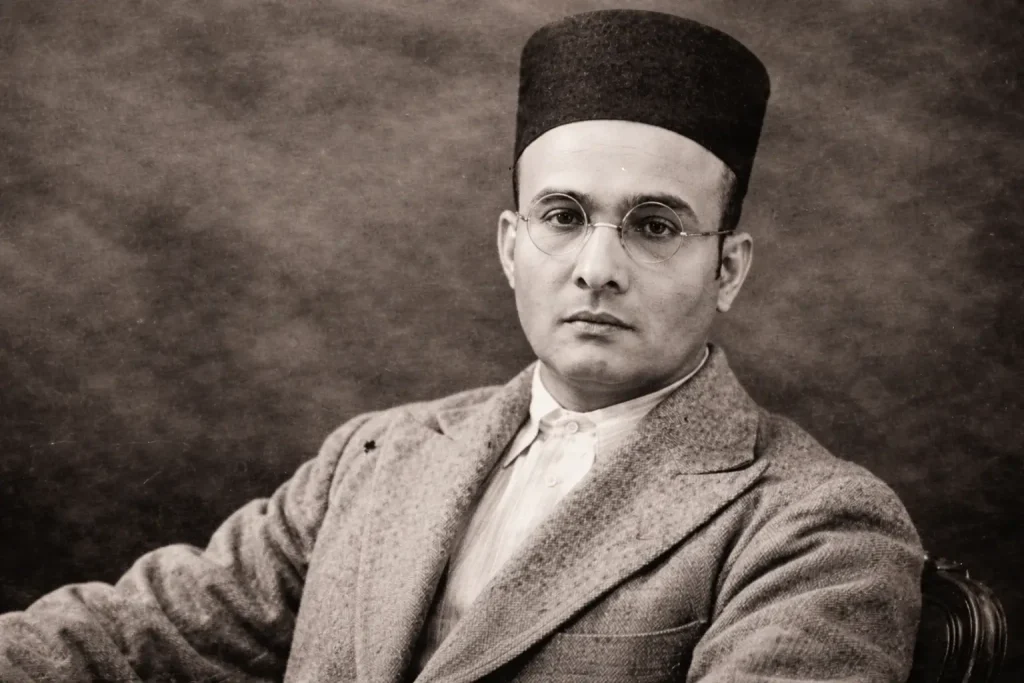
“One country, one God, one caste, one mind, brothers all of us without difference.”
Pioneer of Armed Revolutionary Nationalism
Vinayak Damodar Savarkar is widely regarded as one of the earliest leaders to systematically organize an armed revolutionary movement against British rule. At a time when political resistance was largely moderate and petition-based, he advocated complete independence and prepared young Indians for direct action. While studying in London, he founded revolutionary networks that connected Indian students with nationalist activists across Europe. Through organizations like Abhinav Bharat, he promoted political awareness, military training, and the study of revolutionary movements worldwide. His writings, especially on the 1857 uprising, reframed it as India’s First War of Independence, inspiring a militant spirit among youth. Savarkar believed that intellectual resistance alone was insufficient; he argued that strategic preparation, unity, and courage were necessary to overthrow colonial domination. His leadership transformed scattered dissatisfaction into a structured revolutionary ideology that emphasized sacrifice, discipline, and national pride, laying the foundation for future revolutionary movements.
Savarkar’s efforts went beyond speeches and literature; he actively encouraged the procurement of arms and the formation of secret societies dedicated to liberation. British authorities closely monitored his activities, recognizing the growing influence of his revolutionary ideas. His arrest and subsequent transportation to the Cellular Jail in the Andaman Islands demonstrated the perceived threat he posed to colonial authority. Despite enduring years of harsh imprisonment, isolation, and physical hardship, his ideological commitment remained unbroken. His early insistence on complete independence—long before it became a mainstream demand—distinguished him from many contemporaries. By advocating organized resistance and inspiring networks of revolutionaries, he played a crucial role in shaping the militant phase of India’s freedom struggle. His legacy in the context of armed resistance remains significant, marking him as one of the foremost architects of revolutionary nationalism during the early twentieth century.
Intellectual Architect of Modern Hindu Identity
Hindutva Identity
Defined cultural nationalism emphasizing shared heritage, history, civilization, and collective national consciousness.
Cultural Unity
Advocated unity beyond caste divisions, promoting social cohesion within broader Hindu society.
Social Reform
Opposed untouchability and encouraged temple entry, equality, and progressive community reforms.
National Identity
Framed Hindu identity as civilizational foundation shaping India’s political and cultural vision.
Patriot, Poet, Philosopher
Vinayak Damodar Savarkar dedicated his life to India’s complete independence at a time when many leaders still demanded limited reforms. He believed freedom was a birthright and must be achieved through courage, organization, and sacrifice. His imprisonment in the Cellular Jail did not weaken his resolve; instead, it strengthened his determination to inspire future generations toward national unity and self-reliance.
Savarkar was a gifted Marathi poet whose compositions reflected patriotism, resilience, and spiritual depth. Even during harsh imprisonment, he composed verses from memory, writing on prison walls and preserving them through oral recitation. His poetry blended emotion with revolutionary zeal, encouraging mental strength, discipline, and devotion to the motherland.
As a thinker, Savarkar articulated a comprehensive vision of cultural nationalism and civilizational identity. His philosophical ideas extended beyond politics into social reform, rationalism, and modernization. He emphasized unity above caste divisions and believed that a strong cultural foundation was essential for building a powerful, independent nation.
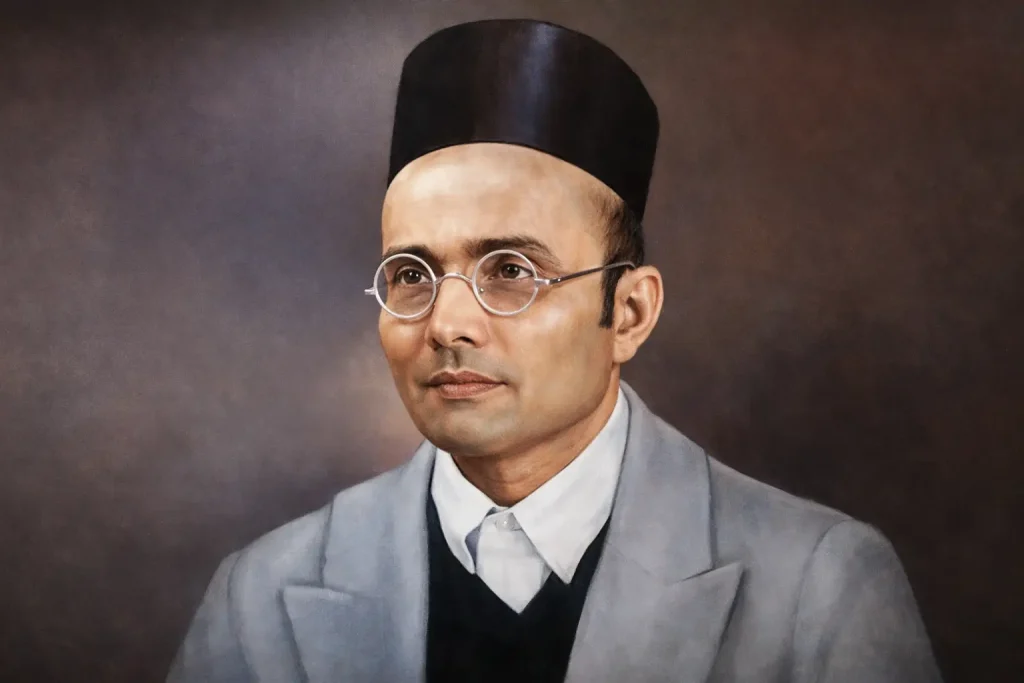
Explore the Life & Legacy of Veer Savarkar
Revolutionary Steps
Explore Savarkar’s role in India’s revolutionary freedom struggle, his leadership, and the nationalist movement he inspired.
Cellular Jail Years
Learn about Savarkar’s imprisonment in the Andaman Cellular Jail and the hardships he endured
Social Reform
Discover Savarkar’s work toward social equality, removal of untouchability, and strengthening Hindu society.
Ideology & Philosophy
Understand Savarkar’s philosophy of Hindutva, nationalism, and cultural identity through his life & legacy as a freedom fighter